Change what you are doing with your home heating and energy use. Electrifying your home heating system with a heat pump is one of the most effective ways to reduce your overall carbon footprint and make your home more comfortable. An ideal time to consider a heat pump is when you need to replace your existing heating or cooling system or when you want to add air conditioning, because heat pumps provide cooling as well as heating. Incredibly, they work all winter long and only use half the electricity that would be used by window air conditioners during the summer.
A mini-split heat pump is another energy efficient option that may be right for you if:
- You have oil, propane, or electric heat.
- You are considering adding or replacing air conditioning.
- You have one room that stays cold and you want to fix it.
- You want to take advantage of Mass Save incentives of $3,000/ton on air source heat pumps (capped at $10,000).
Ok, but how do mini-split heat pumps work?
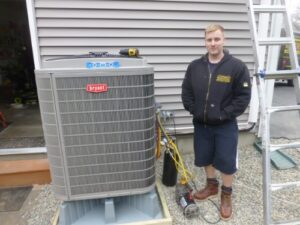
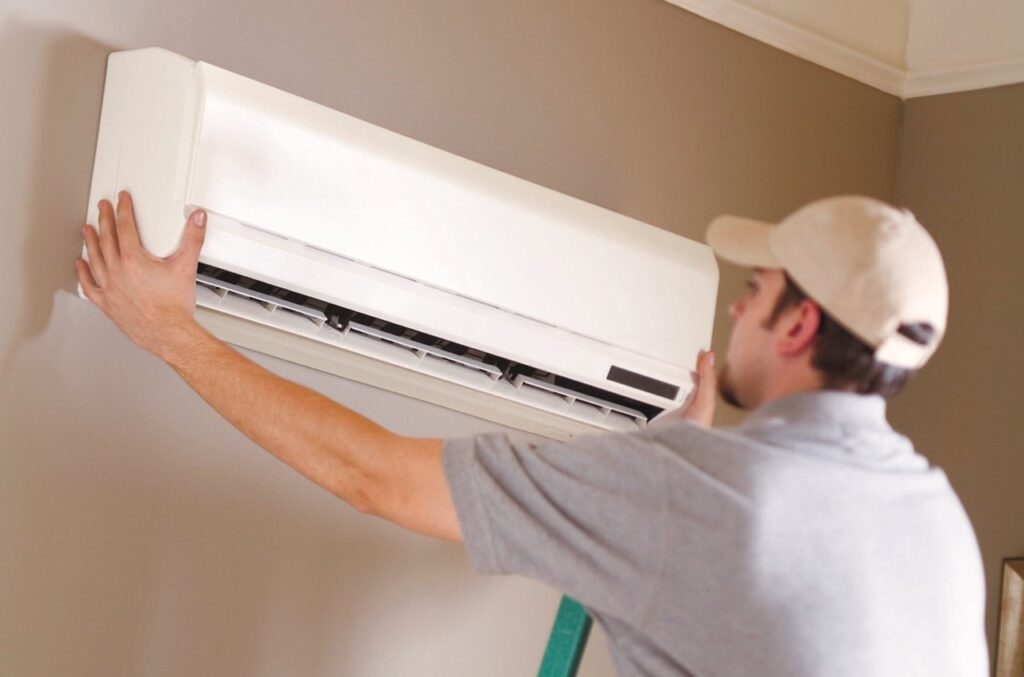
Basically, a heat pump is a device that moves heat from one place to another. It works much like an air conditioner or a refrigerator and not like a boiler or furnace that burns fuel. While a refrigerator moves heat from your fridge to your kitchen, a heat pump moves heat from your home to the outside, or vice versa. Just like a central air conditioning system, mini-split heat pumps have two parts: an outdoor condensing unit and one or more indoor air handling units, connected by a conduit through your wall. They usually have no ducts, but can sometimes have a short duct system.
Want to see how it works in animation? Watch the mini-split video on Mass Save here: Heat Pump Video
Mass Save has several incentive programs to sweeten the deal on heat pumps. In order to qualify, you should do everything you can to maximize the insulation in your home and reduce drafts. You can learn about what you might need during a Mass Save Home Energy Assessment. You can also check out the federal incentives on Rewiring America’s IRA calculator. You can learn more about what items are eligible with this chart from the Department of Energy.